
9/14/2026
Learn More About P&G’s Climate Initiatives and Net Zero Ambition

At Procter & Gamble, our ambition is to achieve net zero greenhouse gas (GHG) emissions across our supply chain and operations from raw material to retailer by 2040. We see sustainability as a strategic way to help future-proof our operations and operate an agile, thriving business.
Our focus is on significantly reducing absolute GHG emissions in our operations and supply chain. Then, we aim to balance remaining emissions by 2040 by advancing natural or technical solutions that remove an equivalent amount of greenhouse gas emissions from the atmosphere.
Near-term science-based targets for 2030 pace our progress, and our Climate Transition Action Plan outlines our approach. We’re partnering across the private, nonprofit and public sectors to support the transformation of energy and transportation infrastructure needed at scale.
Reducing supply chain emissions takes intentional partnerships and shared determination. That’s why collaboration with suppliers is central to P&G’s approach. Together, we are exploring lower-carbon materials and solutions that can help accelerate progress across our value chain.
This post addresses the top questions about our climate action and how we are working toward our ambitious net zero goals alongside our partners.
1. What is P&G’s net zero ambition?
P&G's ambition is to achieve net zero GHG emissions across our supply chain and operations — from raw material to retailer — by 2040. This includes our purchased materials and upstream transportation. Our climate journey began nearly two decades ago, focusing initially on our manufacturing facilities. We have since broadened our work; our ambition spans sourcing materials to transporting finished products to retailer.
2. What steps is P&G taking to reduce greenhouse gas emissions?
Our strategy focuses on significantly reducing GHG emissions in our operations and supply chain. Our 2030 climate goals are to:
- Reduce Scope 1 & 2 GHG emissions by 65% compared to a 2010 baseline, an increase from our previous goal of 50%
- Purchase 100% renewable electricity globally
- Reduce global upstream finished product freight emissions intensity by 50% compared to a 2020 baseline
- Reduce supply chain emissions by 40% per unit compared to a 2020 baseline
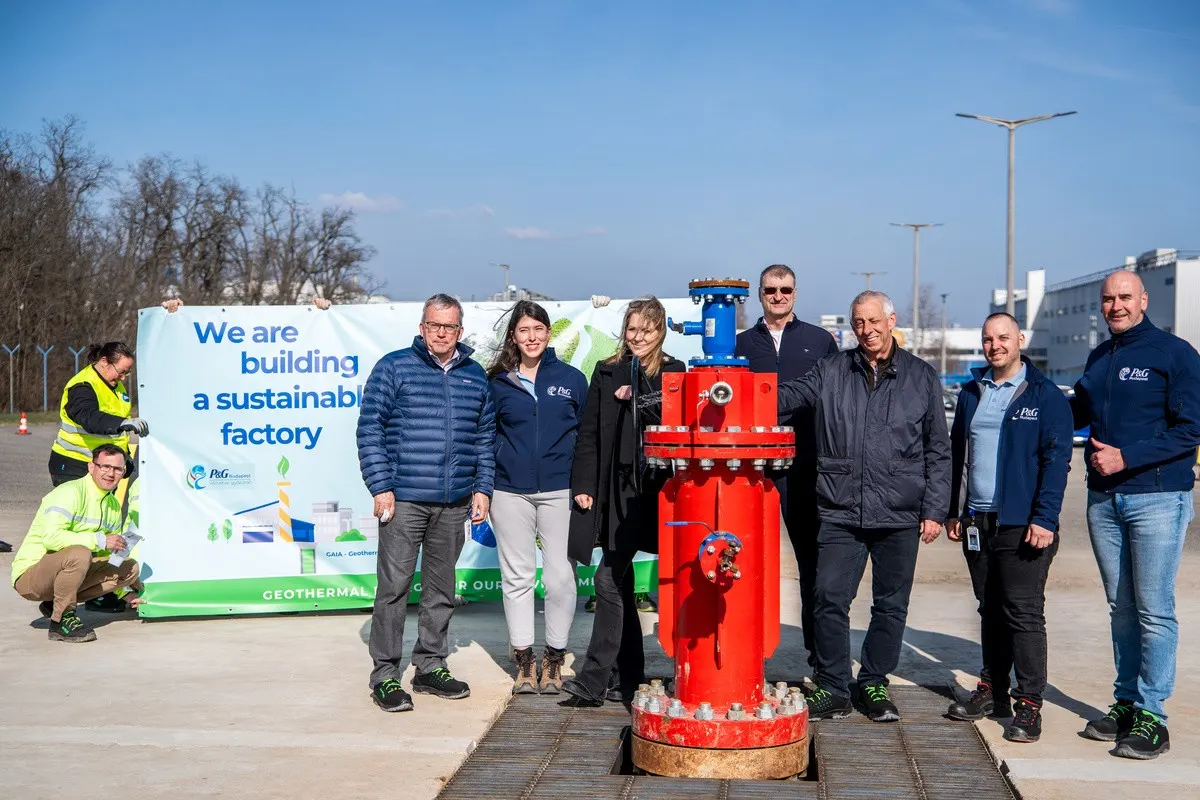
P&G sites around the world are identifying new ways to improve efficiency and reduce emissions. At P&G's Budapest Feminine Care site, a geothermal energy system is intended to help replace natural gas with a local renewable heat source, supporting efforts to reduce greenhouse gas emissions in our operations.
3. How does waste reduction fit into P&G’s climate strategy?
Waste reduction is a vital part of our climate strategy. By aiming to design all consumer packaging to be recyclable or reusable by 2030, we are helping minimize waste while reducing the overall environmental impact of our products. We’re also working to reduce our use of virgin petroleum plastic in our consumer packaging by 50% per unit of production versus a 2018 baseline. Learn more about our waste efforts HERE.
4. How is P&G using renewable energy?
We are working toward purchasing 100% renewable electricity by 2030, and with more than 99% of our electricity already sourced from renewable sources globally, we are well on our way. Renewable electricity is an important part of our efforts to reduce greenhouse gas emissions across our operations.
5. How does P&G plan to tackle emissions in its supply chain?
We are focused on improving transportation efficiency and collaborating with suppliers to reduce the carbon footprints of purchased materials. Our ambition is to reduce supply chain emissions by 40% per unit compared to a 2020 baseline and reduce global upstream finished product freight emissions by 50% compared to a 2020 baseline.
To help advance progress toward these goals, we are working with suppliers across our value chain to help advance lower-carbon materials and support emissions reductions. And in 2023, P&G created the P&G Climate Unlock Program, which provides P&G suppliers with education, resources and training to support their climate progress.
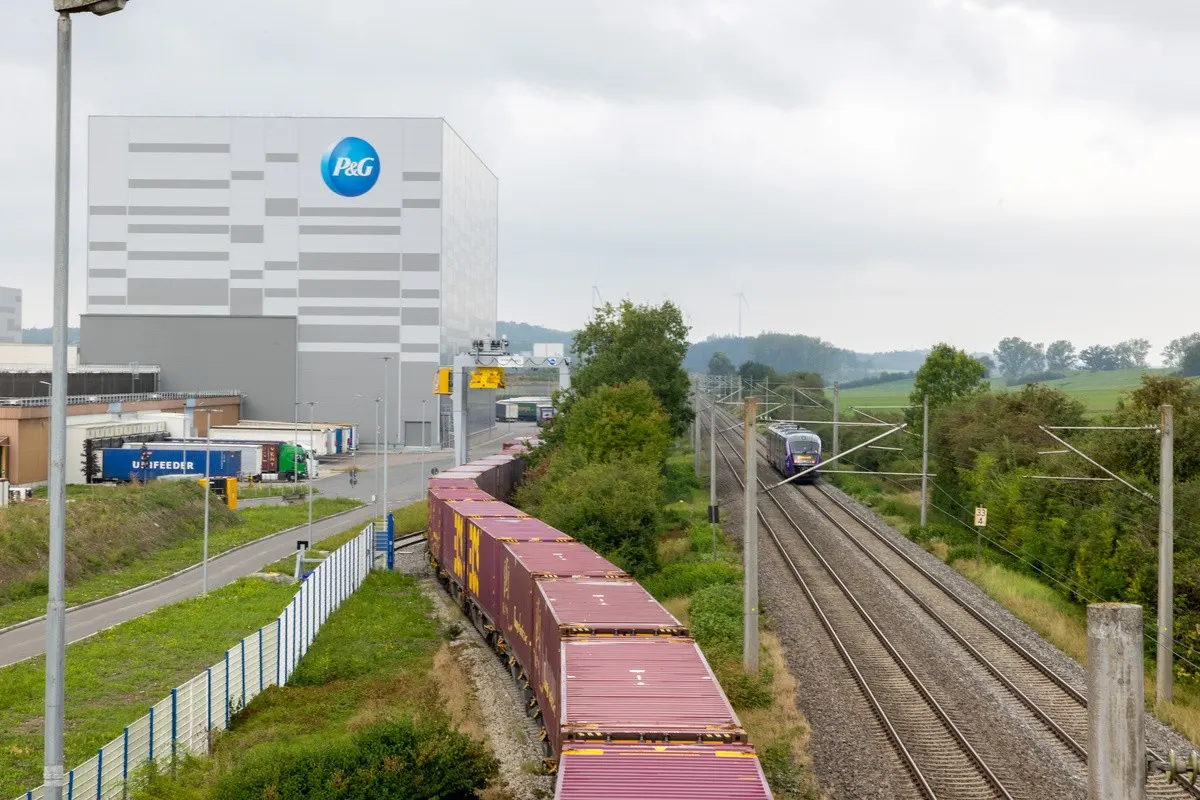
Reducing transportation emissions is an important part of P&G's climate efforts. At our Crailsheim, Germany site, a rail terminal developed with logistics partners is helping shift freight from road to rail.
6. Does P&G use offsets as part of its climate strategy?
Our top priority is to reduce our absolute greenhouse gas emissions. We have accelerated our efforts here and will continue to invest in new solutions to drive reductions further.
We acknowledge that nature is a powerful solution today that can reduce CO2 in the atmosphere. That’s why, for emissions we do not eliminate, we will explore natural or technical solutions to remove an equivalent amount of GHG emissions from the atmosphere. This includes collaborating with environmental NGOs to support projects that protect and restore forests and ecosystems. Learn more about our nature efforts HERE.
7. What challenges does P&G face in its climate journey?
We realize there’s a need for new technologies to help reduce the impacts of climate change. We view these challenges as opportunities for growth and innovation, and we are committed to learning and adapting as we move forward. P&G is enabling people to reduce their environmental impact at home when they use our products and partnering to scale industry-wide solutions that will accelerate success for all of us – P&G, our consumers, and our industry. Reducing greenhouse gas emissions requires both ingenuity and partnership. In our path to net zero, we are looking toward using technology that exists today to reduce emissions, investing in new solutions and materials innovation, and embracing transformative collaboration.
8. How can consumers contribute to P&G’s climate efforts?
Our strategy is focused on innovation that solves everyday problems through irresistible superiority that drives market growth and is more environmentally sustainable. Consumers can play an important role by making small changes in their daily routines, such as using cold water for washing clothes to reduce energy consumption.
Through our long-standing partnership with World Wildlife Fund (WWF), we support efforts that help consumers take simple actions that can add up to a meaningful impact over time. WWF collaborates with brands like Tide and Ariel to promote sustainable habits at home, including washing laundry in cold water, which can help reduce energy use while extending the life of clothing. Together, we aim to help make sustainable choices easier in everyday routines.
9. How does P&G measure and track progress toward its climate goals?
P&G tracks progress toward defined climate goals and metrics and reports results through our Citizenship Report and ESG Investor Portal. We use science-based targets to guide our efforts and regularly publish data on key measures, including greenhouse gas emissions and energy consumption.
P&G follows the guidelines of the World Resources Institute (WRI) and the World Business Council for Sustainable Development (WBCSD) GHG Protocol Corporate Accounting Standard. We also provide independent assurance for greenhouse gas emissions data reported through our climate disclosures.
10. How can I stay up-to-date with P&G’s climate efforts?
P&G is dedicated to transparency and will share updates on our progress toward net zero through our ESG Investor portal and in our Citizenship Report.
Addressing climate change is complex and requires innovation and collaboration. We’re delivering impact at three levels: reducing our own impact, enabling consumers to reduce their impact and helping industry reduce its environmental impact through scalable solutions.
Explore our Climate Transition Action Plan to learn more about P&G’s climate initiatives and our ambition of achieving net zero emissions by 2040.
READ MORE STORIES ON OUR BLOG

4/7/2026
What’s the Key to a Winning Sustainability Strategy? Integration.
Learn how P&G embeds sustainability into our company’s business strategy.
Read more
9/26/2025
P&G and WWF: 15 Years of Partnership for a Sustainable Future
We are proud to celebrate a remarkable milestone: 15 years of partnership between Procter & Gamble and World Wildlife Fund.
Read more

4/10/2026
Citizenship in Real Life: Stories on the Move
Learn how P&G colleagues in Europe are advancing sustainability, reducing greenhouse gas emissions, and strengthening communities.
Read more